Revegetation

Revegetation is the science- art- craft of establishing desirable plants in a disturbed area. In our part of the world, the Southwest, that usually means seeding grasses or wildflowers. They are what work best here with a minimum of long term maintenance.


Erosion control, weed prevention, wildlife habitat, aesthetics, and dust abatement are all reasons you might want to revegetate. County requirements or local building codes are also reasons to reseed.


There are a number of ways to get seed on the ground for revegetation projects, however, there is no single “best” way to seed. Every job is different based upon what kind of shape the ground is in. Looking to see if the soil is loose or compacted, flat or sloped, covered with weeds, and deciding what the eventual goal of the reseeding is, can help to figure out the best way to seed for that particular site.


There is one undeniable truth about revegetation: no matter what broadcast method is used, if there is not enough moisture nothing grows. Moisture is the key for successful plant establishment. The good news is that native seed is very tough and will stay in the ground for years, if necessary, waiting for the right conditions to germinate. 


Below are a couple of articles that were written to deal with reseeding specifics. If you want more information on reseeding in this part of the world, there is a whole chapter covering it in "Just Add Water". 


More Revegetation Photos


Seeding Basics

March 28, 2005

Here are a few questions that we have been getting asked lately about the reseeding process.

Q. When is the best time to put down native grass seed?

A. Are you sure that we can’t start with an easier question? I am not sure there is a right answer to this one. In the natural world the seed drops in the fall. The theoretically gentle winter rains help to settle it into the soil. Fall is a good time to seed. On the other hand seeding just before the summer rains means the seed will be on the ground for the shortest amount of time before it can germinate. This would lessen the amount lost to wind, insects, and birds. So, early summer is also a good time to seed. As a seeding contractor we seed year round and slightly adjust the seed mixture to make the most of whatever season it happens to be. I guess the best time to seed is right before an extended wet period.

Q. What conditions are necessary for good germination of our warm season native grasses?

A. Good seed + 80 degree or higher ground temperature + 8-14 days of constant moisture on the seed bed = germination of our warm season native grasses.

Q. What do we have to do to prepare the ground before seeding?

A. Unless the ground has been slicked off and compacted don’t do too much. The looser and rougher the surface the better. You don’t have to remove the rocks as they hold moisture and give the seed someplace to hide. Every depression or pocket holds moisture and give the seeds a better chance. Compacted dirt just sheds water and dries out too fast. Disturb it so the water slows down and can penetrate into the ground. Do whatever you can to rough it up with tractor rippers, a pick, or even with a rake.

Q. What is the single most critical part of the reseeding process?

A. Moisture. You can always add more seed and you know that the ground will eventually be warm enough, but moisture is the wildcard. Irrigation is a great equalizer but it isn’t always practical in an arid area. The trick is to get the precipitation that does fall to stick around for a while. That is why soil preparation is important. There are also a few low tech methods for slowing down water run off. Start by laying branches or rocks in a line perpendicular to the flow of the water. A light mulch will also retain some moisture and help tip the odds in your favor. A steep slope, especially south or west facing will be more difficult than flat or gently sloping sites to reseed.

Q. How long does it take an area to come back after it is reseeded?

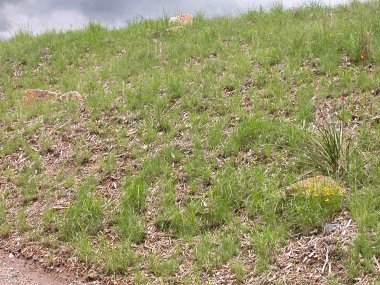
A. Relax, my impatient friend. It took many thousands if not a million years for our part the of the world to get the look that it has. Then you scraped it clean in about an hour and a half. It is not coming back in 6 weeks. Most jobs take several years before they look “natural”.

Q. What is the best species of grass to use in Southeast Arizona?

A. Never limit yourself to a single species. If you choose wrong you just wasted a bunch of money and effort. The shotgun approach works best. I like a 6-8 species mix. Some grasses will prefer different locations even on the same piece of property. A mix gives you the best chance of having a species for every situation. Your mix should also include species that germinate quickly and act as pioneer plants. These help slow down water, break up the surface, and give shelter to the longer lived but harder to germinate species.

Q. Speaking about species, what about Love?

A. I am sure glad you asked. If you have the time I would like to share a few details about how lucky I have been in this wonderful experience. You see it all started when…

Q. No, you nimrod, I was asking about Lovegrass, not your personal life.

A. Sorry, that is a long story. I guess that will have to wait until next time.

Range Restoration - Part 2- Getting it Down

There are many different ways for getting seed on the ground. The good news is that providing you meet the formula (good seed + proper ground temp. + adequate moisture) they can all work. The trick is to figure out what method is the best and most economical for the job you are doing. Like most jobs a little effort beforehand can save lots of work later on. The most important thing to do ahead of seeding is ground preparation.

Anything that can either slow water from running off, or offers protection to the seed, is good. On construction sites or horse pastures the ground is often slick and compacted. Break it up. Rocks are ideal. Leave them where they are. Any ripping or raking should be done perpendicular to the direction of runoff. The object is to create “safe sites” or little pockets in the ground that can hold moisture and give the seedlings a better chance of taking hold.

The cheapest way to get seed on the ground is to hand broadcast it. Much of our native grass seed is too light and fluffy to go through hand seeders. It just hangs up. Blue Grama, Side Oat Grama, Az. Cottontop, and many more will just not go through these devices. Very technically speaking this hand broadcasting method is referred to, by range management specialists, as “feeding the chickens”. Hand seeding is usually done on smaller areas. It also can be used on conditions where you are trying to supplement or add species to an existing patch of vegetation. A good general seeding rate for most types of seeding is 1 lb. per 1000 sq. ft. or 40 lbs. per acre. This makes the assumption that a general mix of native grasses is going down. Of course each individual species has its own rate of application. The biggest drawback to hand seeding is that it doesn’t give very good seed to soil contact which is necessary for good germination. You can help settle the seed by watering or lightly tamping it after broadcasting. Hand seeding probably has the highest loss of seed due to wind and seed feeders like birds and insects.

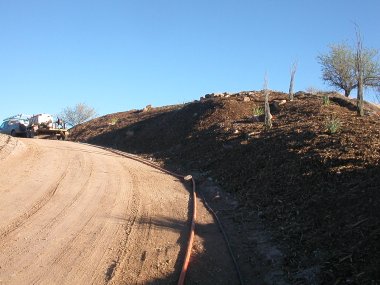
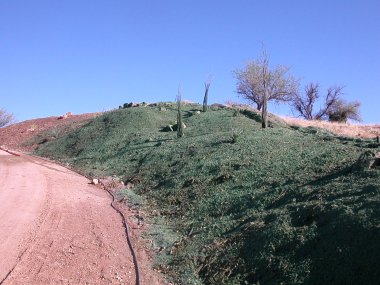
Hydroseeding is the application of seed, mulch, and something to make it stick. It is shot out of a tank under pressure. Almost any kind of seed can be applied this way. This is “the green stuff on the side of the highway” that just went in on Highway 83 just north of Sonoita. The mulch helps hold moisture for the seed. It also locks up the seed so the loss to birds and insects is reduced. Hydroseeding works well on construction scarring and leech fields. It is also used extensively on slopes. This method of application can also provide some dust control. Hyrdoseeding is not something the homeowner does by themselves as it requires specialized equipment. It works well on medium sized jobs, usually less than an acre. There are more cost efficient ways for seeding larger portions of ground like your 5 acre horse pasture.